Protecting Civic Space Is a Constitutional Responsibility: KI at the Civic Space Summit
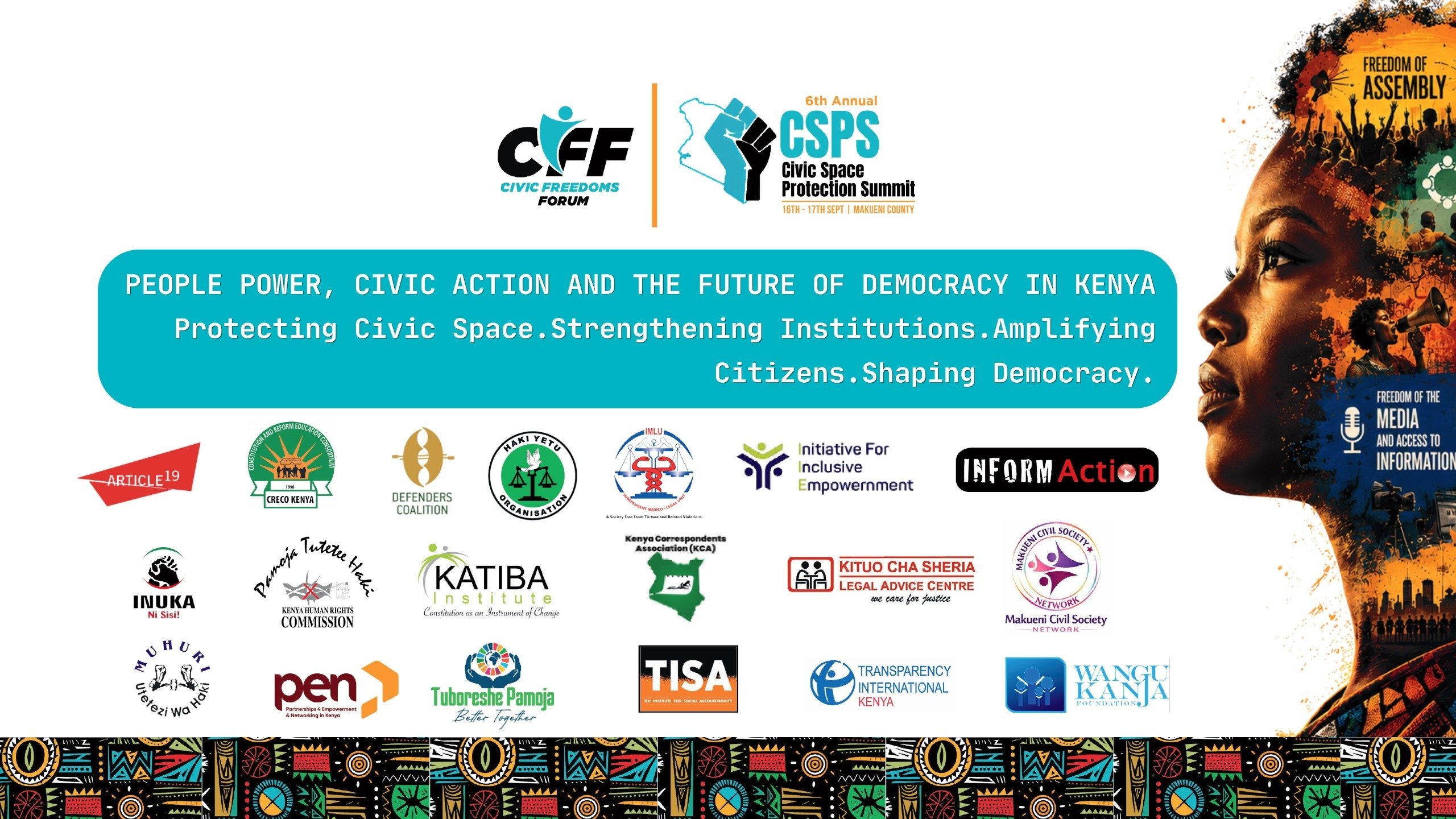
Katiba Institute participated in the 6th Civic Space Protection Summit held in Wote, Makueni County, under the theme “People Power, Civic Action and the Future of Democracy in Kenya: Protecting Civic Space. Strengthening Institutions. Amplifying Citizens. Shaping Democracy.” The Summit brought together human rights defenders, journalists, civic actors, grassroots movements, lawyers, diplomats, artists, students and other stakeholders to reflect on the state of civic space in Kenya and explore collective approaches to protecting democratic participation and constitutional freedoms.
The discussions were particularly timely as Kenya approaches the 2027 General Election, with participants examining the protection of human rights defenders, journalists and civic actors, the role of independent institutions, youth-led civic movements, accountability and solidarity among civic actors.
Speaking during a panel discussion on “Collective Protection for HRDs, Journalists and Civic Actors Ahead of the 2027 Elections,” Katiba Institute’s Head of Communications and Knowledge Management, Kevin Mabonga, emphasised that KI views civic space fundamentally as a constitutional issue. He noted that civic participation, freedom of expression, access to information, freedom of assembly and freedom of association are constitutionally protected rights.
“Protecting human rights defenders, journalists and other civic actors is part of protecting the constitutional order and ensuring meaningful democratic participation,” he said.
Mabonga noted that protecting civic space will become increasingly important as Kenya approaches the 2027 General Election, when citizens’ ability to organise, speak freely, access information and hold public institutions accountable will be critical. He highlighted Katiba Institute’s work in defending civic space through public interest litigation and constitutional advocacy, including challenging laws and practices that restrict citizens’ rights. This includes KI’s challenge to the Community Groups Registration Act and its work challenging police barricading of roads during public protests.
The importance of this work has been underscored by recent court rulings. In one ruling, the Court held that the Inspector General of Police, Douglas Kanja Kirocho, had failed to comply with binding orders requiring timely public advisories before police barricaded roads or established checkpoints. In another ruling, the Court declared the Community Groups Registration Act unconstitutional for having been enacted without sufficient public participation. The rulings highlight the importance of ensuring that measures taken by law enforcement agencies, particularly during public demonstrations and other civic activities, remain subject to the Constitution, the law and binding judicial orders.
Mabonga stressed that protecting civic space must be a collective responsibility. No single organisation can adequately respond to the physical, legal, digital and reputational threats faced by human rights defenders, journalists and other civic actors. He called for stronger collaboration among civil society organisations, lawyers, the media, oversight institutions, grassroots movements, professional bodies and international partners. Such collective protection, he noted, should include early-warning and information-sharing mechanisms, rapid response, legal support, documentation, referrals and solidarity.
The discussion also underscored the importance of protecting the independence of constitutional and statutory institutions responsible for oversight and accountability. Mabonga observed that the responsibility for protecting civic space cannot rest entirely on civil society organisations responding to violations after they occur. Independent institutions must be able to carry out their constitutional and statutory mandates effectively and independently. He encouraged civic actors to strengthen engagement with institutions such as the Kenya National Commission on Human Rights (KNCHR), the Independent Policing Oversight Authority (IPOA) and the Commission on Administrative Justice (CAJ), while continuing to document, report and follow up cases where rights are threatened.
A key takeaway from the discussion was the need to establish and strengthen protection mechanisms before threats escalate. These include early-warning and information-sharing networks, legal and rapid-response mechanisms, journalist and human rights defender protection networks, digital-security preparedness, clear documentation protocols, effective referral pathways, stronger engagement with oversight institutions, and regional and international solidarity mechanisms.
The Summit underscored that protecting civic space requires sustained preparedness, collaboration and solidarity. As Kenya approaches another electoral period, strengthening these mechanisms will be important in ensuring that citizens, journalists, human rights defenders and other civic actors can exercise their constitutional rights safely and meaningfully. Katiba Institute’s participation reaffirmed its continued commitment to constitutionalism, human rights, the rule of law, democratic governance and meaningful citizen participation.