High Court Declares Laikipia Ebola Quarantine Arrangement Unconstitutional, Orders Full Disclosure
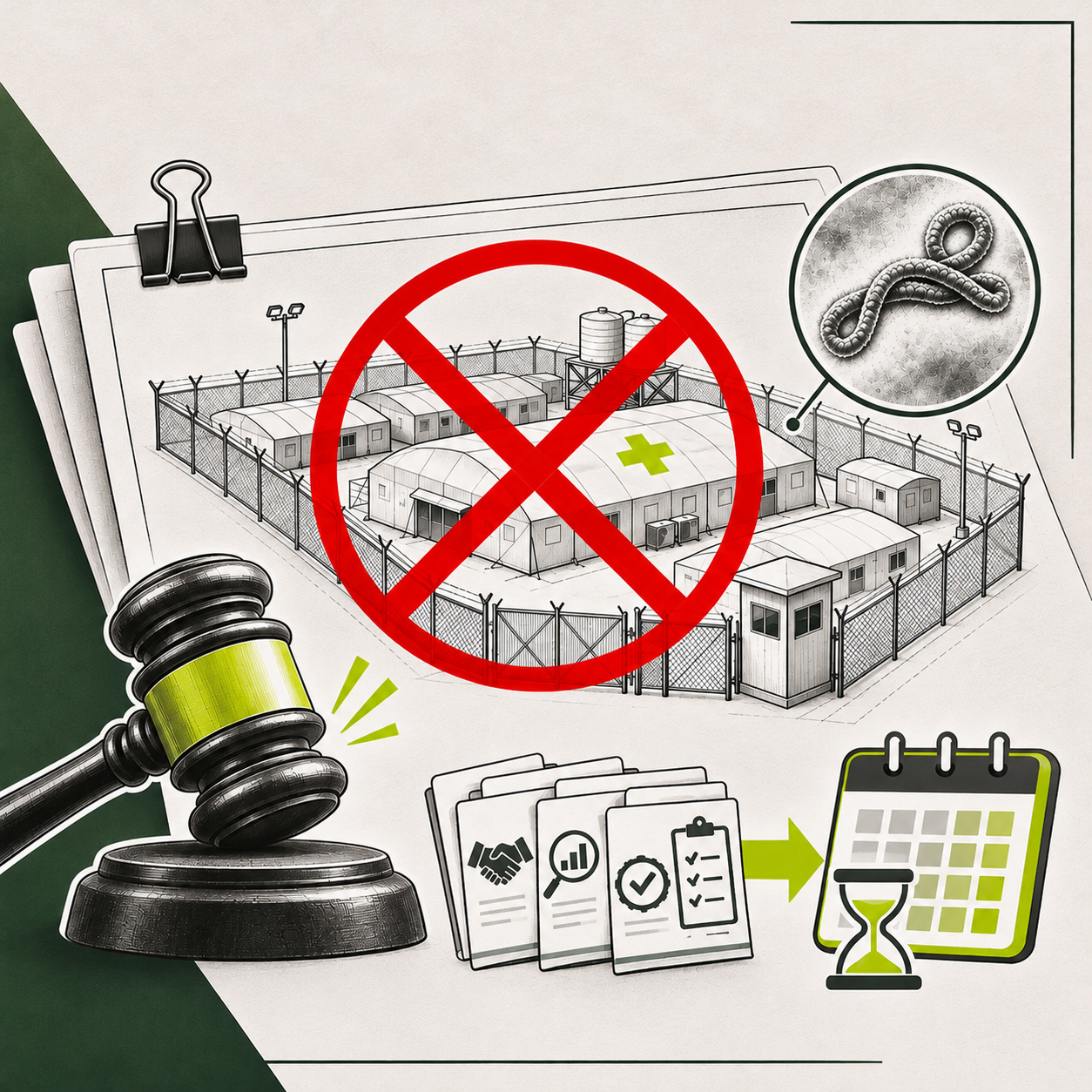
The High Court has declared unconstitutional the Government’s arrangement with the United States to establish an Ebola quarantine and treatment facility at Laikipia Air Base, ordering the Government to disclose all agreements, assessments, approvals and protocols relating to the project within 45 days.
In a judgment delivered today, Justice Patricia Nyaundi ruled in consolidated petitions filed by Katiba Institute and the Law Society of Kenya against the Attorney-General and the Cabinet Secretary for Health. The Court found that the process leading to the establishment of the facility failed to uphold the national values and principles of governance under Article 10 of the Constitution, particularly transparency, accountability and public participation.
The Court further found the Respondents in breach of Article 35(3) of the Constitution for failing to make available important information relating to the facility. This includes the full terms of any agreement, memorandum, arrangement or negotiations relating to the facility; public health, environmental, biosafety and security assessments; approvals obtained from Parliament, regulatory agencies or county governments; and protocols governing the admission, handling, isolation and treatment of exposed persons.
Consequently, the Court issued an order of mandamus directing the Cabinet Secretary for Health to make all the identified documents and information available to the public, the petitioners and the Court within 45 days. It also prohibited the Cabinet Secretary from undertaking any further works on the facility or operationalising it until the Court certifies that the disclosure order has been satisfactorily complied with. The Court made no order as to costs, recognising the public interest nature of the petitions.
The judgment reinforces a fundamental constitutional principle: the Executive is bound by the Constitution in all its dealings, including international arrangements and decisions made in response to public health emergencies. International cooperation cannot be used to circumvent constitutional obligations or undermine the public’s right to information and participation in decisions affecting their lives and welfare.
Katiba Institute filed its petition on 28 May 2026, just hours before the facility was scheduled to open. On the same day, the Court suspended the project and subsequently directed the Government to disclose the agreement underpinning the arrangement. The documents subsequently disclosed did not include an environmental and social impact assessment or a safety contingency plan. In June 2026, the Court found the Cabinet Secretary for Health in contempt for allowing construction works to continue in violation of its orders.
Welcoming the judgment, Katiba Institute Executive Director Nora Mbagathi said:
“Today’s judgment confirmed what we have said from the first day: Kenyans cannot be kept in the dark about decisions that put their lives and health at stake,” said Nora Mbagathi, Executive Director of Katiba Institute. “The Government now has 45 days to put everything on the table: the agreement, the assessments, the approvals, and the protocols. Until it does, and the Court is satisfied, the Laikipia facility cannot go further.
“The lives and health of Kenyans are not bargaining chips in international diplomacy. No government can negotiate away the people’s constitutional rights behind closed doors and expect the courts to look the other way. The Constitution must govern even when the Executive finds it inconvenient,” said Joshua Malidzo Nyawa, counsel for Katiba Institute.
Following the judgment, Katiba Institute calls on the Government to publish, in full, all documents and information identified by the Court within the stipulated 45 days. The Government must also respect the prohibition on further works or operationalisation of the facility and publicly account for the admission of foreign nationals to the facility in July while the Court’s orders were in force. Katiba Institute further urges the Government to subject any future international public health arrangements to appropriate parliamentary and public scrutiny before they are concluded, and to prioritise national Ebola preparedness measures as the country works towards being declared Ebola-free.
Katiba Institute will closely monitor compliance with the Court’s orders and will return to Court should the Government fail to comply.
Katiba Institute acknowledges the support and contributions of the Law Society of Kenya, KELIN, the Kenya Human Rights Commission and the County Government of Laikipia throughout the proceedings. We particularly recognise the people of Laikipia who spoke up and stood for their rights. We also remember those who lost their lives during the protests.
This judgment is an important reminder that constitutional safeguards do not take a back seat during public health emergencies or international engagements. Government decisions must remain transparent, accountable and subject to public scrutiny. The Constitution binds all State actors, without exception.