Judiciary’s Quiet Alignment Should Worry Every Kenyan
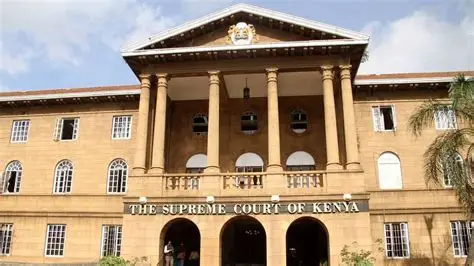
The Standard’s weekend headline landed with unusual force: ‘Unholy trinity: Kenyans left alone as three arms of government close ranks’. Most readers probably nodded when they reached the sections about the Executive and the National Assembly. That alignment no longer surprises anyone. In recent years Parliament has often appeared willing to run errands for the Executive, and the political relationship between President William Ruto, Speaker Moses Wetang’ula, and Senate Speaker Amason Kingi reflects the pragmatic bargaining that defines Kenyan politics. When politicians negotiate power, Kenyans recognise the incentives at play.
But the Judiciary’s place in this emerging alignment is a different matter entirely. And it should give every Kenyan who still believes in the separation of powers reason to pause.
I write from a vantage point shaped by years spent in Kenya’s civic spaces. As a young activist, I participated in Bunge la Mwananchi, the open-air “people’s parliament” at Jeevanjee Gardens where citizens debated national issues freely. Through that organisation, I experienced a front-row view of how civil society operates and how its leading voices rise to prominence. Having once believed deeply in that transformative promise, the present moment feels particularly sobering.
What I witnessed over time was a pattern that political economist Thomas Sowell once described as the mindset of “the anointed”, a self-appointed elite convinced that its moral vision places it above ordinary scrutiny. In that worldview, good intentions substitute for evidence and slogans substitute for hard institutional thinking.
The danger of that mindset is not simply intellectual arrogance. It is institutional capture. When careers are built on moral rhetoric rather than measurable outcomes, principles can quickly become stepping stones toward influence and proximity to power.
The 2022 presidential election petition provided one of the Judiciary’s most consequential tests. The Supreme Court unanimously upheld William Ruto’s victory, dismissing several opposition claims as unsubstantiated and characterising some submissions as “red herrings” or unsupported allegations. While the judgment settled the legal dispute, critics contended that it did not fully address wider public concerns about electoral transparency.
More recently, procedural controversies have deepened public unease. In January 2026, the High Court declared certain presidential advisory offices unconstitutional in a case brought by Katiba Institute. Soon afterwards, the Court of Appeal issued a temporary stay of that decision pending the hearing and determination of the appeal. Katiba Institute has argued that the stay was granted without proper notice to all parties, raising questions about procedural fairness. Episodes such as these have prompted critics to ask whether the Judiciary is gradually converging with the political branches it is constitutionally mandated to check.
Concerns about judicial integrity have also resurfaced in public debate. Allegations that once circulated quietly are now being raised openly by senior members of the legal profession. High-profile advocates, including Ahmednasir Abdullahi and Nelson Havi, have repeatedly voiced concerns about corruption within sections of the Judiciary. Although the Chief Justice has convened meetings aimed at addressing these claims, restoring public confidence requires more than dialogue between critics and institutional leaders. It requires visible accountability and transparent processes.
Perhaps the most striking example of the increasingly blurred line between civic activism and state power involves Prof Makau Mutua. For years, he was a prominent critic of executive overreach and an outspoken advocate of constitutional liberalism. He later accepted the role of Senior Adviser on Constitutional Affairs in President Ruto’s office, a position linked to the advisory structures that the High Court subsequently found unconstitutional, although implementation of that ruling remains suspended pending appeal.
The issue is not any single appointment. Democracies routinely absorb critics into government. The deeper concern is the recurring pattern: figures who once built reputations defending institutional independence often become noticeably quieter after entering the corridors of power.
That pattern helps explain why the Judiciary’s perceived alignment with the other arms of government feels particularly unsettling. The Executive and Legislature have never claimed moral exceptionalism. Their conduct reflects the incentives of electoral politics. The Judiciary, by contrast, has long presented itself as the guardian of constitutional restraint. When the guardian begins to appear indistinguishable from the actors it is meant to restrain, public trust inevitably suffers.
This critique has nothing to do with personalities, partisan loyalties, or personal attributes. It concerns the expectations created by decades of civic rhetoric surrounding constitutionalism, judicial independence, and the rule of law. If those ideals are to mean anything, they must be defended consistently, especially when doing so is inconvenient.
The Standard’s headline therefore should not be dismissed as sensationalism. It captures a deeper anxiety within Kenya’s political life: the possibility that the institutional safeguards designed to balance power are gradually converging instead of checking one another. Healthy democracies depend on tension between institutions. When that tension disappears, citizens are left with fewer avenues of accountability.
This article was first published by The Standard
Image: FILE