Building Trust and Accountability: Reflections on Two Years of Strengthening Access to Information in Nakuru
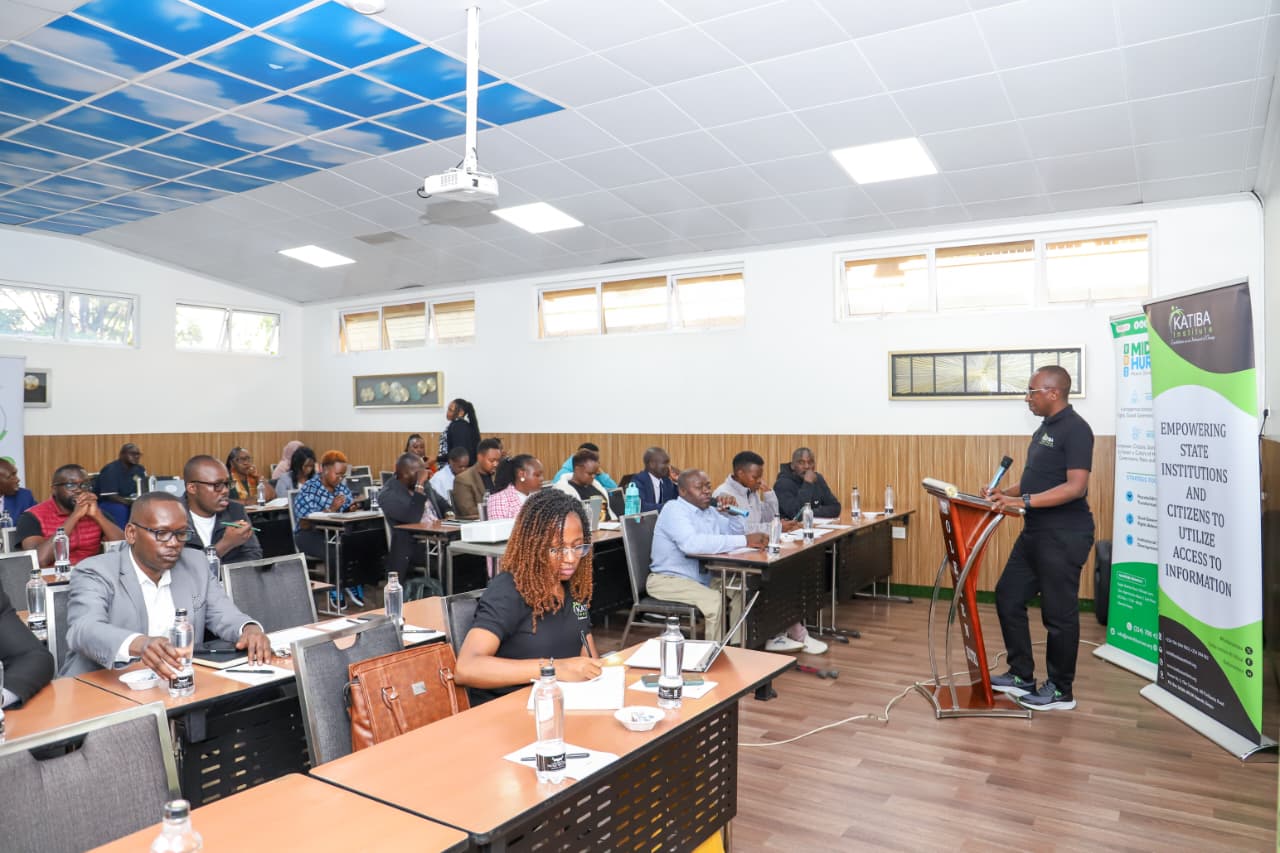
On 4 June 2026, as the project nears its conclusion, Katiba Institute brought together community members, public officers, civil society actors, the Commission on Administrative Justice (CAJ), journalists and county government representatives to reflect on how access to information has become an important part of the lives of the people it serves. For the past two and a half years, Katiba Institute, with support from the Norwegian Embassy, has been working in Nakuru County to strengthen access to information as a tool for good governance and human rights.
The session was more than a progress review. It was an opportunity for participants to share their experiences and reflect on the challenges and lessons learned in their daily lives, from citizens seeking answers from public offices to institutions working to respond more effectively.
Ahead of the session, Katiba Institute met with Midrift Hurinet, its grassroots partner, to reflect on the journey so far. Together, they noted that greater citizen engagement, a growing network of community-based champions for access to information, and increased awareness of constitutional rights have strengthened public participation, accountability, and confidence in devolution.
Opening the discussions, Katiba Institute’s Programmes Manager, Patriciah Joseph, reminded participants that access to information is central to defending the Constitution. “It’s important for us to make access to information a reality,” she said, noting that Article 3 calls on everyone to respect, uphold, and defend the Constitution.
Throughout the session, participants spoke of visible shifts in how communities engage with governance. Citizens are asking more questions, attending public forums more confidently, and taking a greater interest in county budgets and decisions that affect them directly. For many, access to information is no longer an abstract constitutional principle, but a practical right that has improved their everyday lives.
“All other freedoms stem from access to information,” noted Githae, Deputy Executive Director at Midrift Hurinet, adding that public participation is becoming more meaningful as citizens become better informed. He encouraged citizens and public officials to continue fostering a culture in which asking questions is recognised as a legitimate and necessary part of democratic governance.
Representing the Commission on Administrative Justice, Sylvia noted that weak records management systems and the absence of enforcement regulations remain significant challenges. She highlighted the importance of timely and accurate information, warning that “misinformation thrives when the government fails to provide timely and accurate information.” She also pointed to the growing number of Information Access Officers as an encouraging sign of progress.
Speaking on behalf of the county government, Ambrose Ngare, County Executive Committee Member for Public Service Training and Devolution, acknowledged the role of Katiba Institute, Midrift Hurinet, the Ombudsman, and the media in advancing accountability. He highlighted increased proactive disclosure of information through county platforms and described the project as leaving a lasting legacy of transparency, accountability, and citizen engagement.
As participants shared group reflections, one theme stood out: progress has been made, but sustaining it will require stronger partnerships, continued public awareness, and practical action from both government and communities. In Nakuru, the reflection session showed that access to information is not only about documents or procedures but about trust, participation, and people feeling that their voices matter.